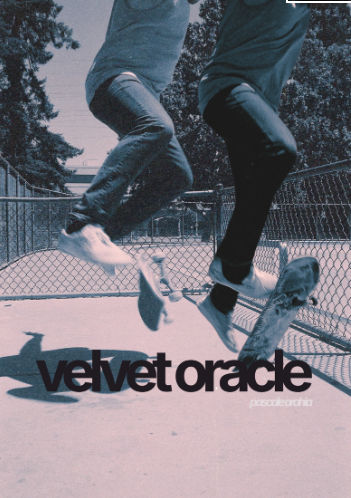
 velvet oracle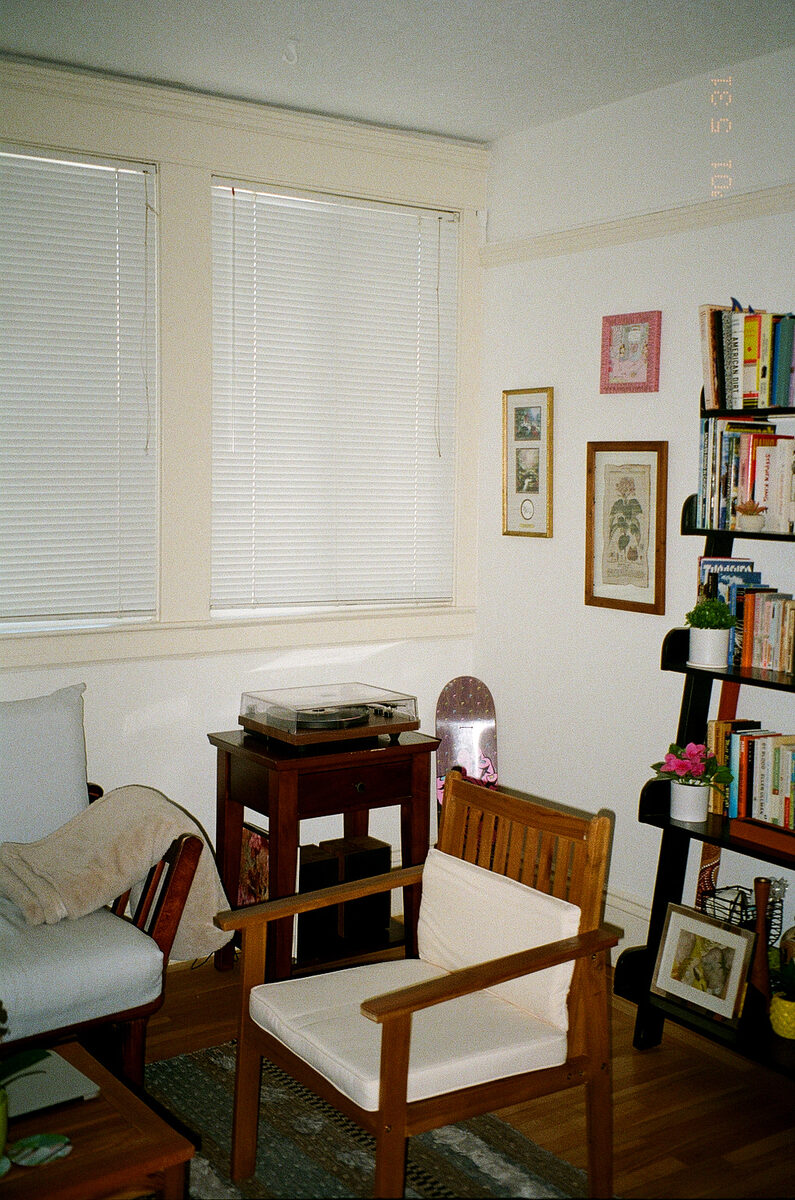
I wasn’t leaving San Francisco. I was coming back.
That’s the part people don’t understand when I tell the story. I packed for a temporary absence — a medical procedure in New Zealand, where I’m a citizen by descent, where it would cost me nothing instead of thousands of dollars I didn’t have. America had given me nine years and a city I loved completely. It just couldn’t give me this. So I left in November 2025 with a return ticket in mind, fully intending to come back to my apartment, my life, the fog rolling in off the bay at 4 pm like it had done every day I’d lived there.
I found out about the fire on Twitter.
There’s a unique type of morning that can only be experienced in San Francisco. On Sundays, Taylor and I would rise leisurely, dress without any rush, and stroll to Simple Pleasures Café for an iced coffee. After picking up a breakfast burrito from Cielito Lindo, we’d drive to Ocean Beach. We would sit in the truck, observing the lives of strangers — joggers, dog walkers, and elderly men who seemed to have frequented that beach long before we were born. In the distance, the Golden Gate Bridge stood, effortlessly stunning as always. I never grew accustomed to it. Even after nine years, I never once looked at that bridge without feeling something profound.
That’s what the city gave me. Not just the view, though the view was extraordinary. It gave me the shape of a good day. It gave me a sense of belonging so complete that I stopped noticing it, the way you stop noticing the sound of the ocean once you’ve lived near it long enough. San Francisco was the water. I was just swimming in it.
Taylor was part of that. He was the person I built the Sunday routine with, the person I assembled the apartment with over years — the record player, the bookshelf stacked floor to ceiling, the piano I played when I needed somewhere to put what I was feeling. The framed prints on the walls. The plants on the windowsill. The particular quality of light in the afternoon that made everything look like a photograph I’d want to keep.
You don’t realise you’ve built a life until it’s gone.
The morning of November 9th, 2025, something felt wrong before I could name it.
Taylor texts me every morning. He always has — it’s the rhythm we kept even after we stopped being together, even after the relationship changed shape into something quieter and more durable. Best friends who talk every day, who know each other’s patterns so completely that silence reads as alarm. That morning, nothing. I waited. I told myself it was nothing. And then, for a reason I still can’t fully explain, I opened Twitter. I am not a person who opens Twitter. I opened it anyway.
The San Francisco Fire Department’s official account had posted at 4:48 a.m. Four photos. Fire engines, ladders against a building, firefighters in gear. 648 views. 3 likes. Just another morning dispatch.
It was my building.
My heart dropped so completely I couldn’t locate it. I started crying — not for my things, not yet, not for the record player or the books or the piano or the nine years of accumulated objects that made me feel like a person who lived somewhere. I cried because I didn’t know where Taylor was. I didn’t know if he was in there. I didn’t know if he was okay. The fire was secondary. He was the only thing I could think about.
I called him. No answer. I called again. Nothing.
For two days, I knew nothing.
He had tried to put the fire out himself.
That’s the thing about Taylor that I have never been able to adequately explain to anyone who hasn’t met him — he is the kind of person who runs toward the thing everyone else is running from. He went in. He tried to save it. And the fire gave him third-degree burns on his hands and across his body in return.
He is healed now. He is okay now. He lives in Modesto with his mother, far from San Francisco, which scattered both of us in different directions — him inland, me across the Pacific. Neither of us ended up back.
When I think about what I lost in that fire, I think about the piano first. Then the books, all of them, hundreds of them, years of accumulation and annotation and dog-eared pages. Then the record player. Everything in that living room — the room that looked most like me, the room I’d taken a photo of once because I loved it and wanted to remember exactly how it looked — gone.
You cannot rebuild a room like that from memory. You can buy new furniture, new books, a new record player. But the particular arrangement of objects that amounts to evidence of a self — that takes years to assemble, and it cannot be reconstructed. It can only be started over.
I think about that room more than I think about the apartment. I think about what it means that the fire took the piano, specifically. Everywhere I’ve ever lived, the piano was how I processed what I couldn’t say out loud. San Francisco took even that.
I live in Sydney now. It’s a good city, and I’m not saying that to perform recovery. The harbour is beautiful. The light is different from San Francisco’s, but it’s still light, still the kind that makes you feel like the world is worth looking at. I’m building something here, slowly. Velvet Oracle, a publication I run myself, writing and photographing and laying out every page, making a thing I’m proud of. The work is real. The life is real.
But San Francisco is still there, somewhere behind everything. Not as grief exactly, not anymore. More like a room in my chest that I know the layout of by heart, even though I can’t go back to it. Even though it burned.
That’s the thing nobody tells you about cities — the good ones get into you. They become structural. You carry the map of them in your body long after you’ve left, and sometimes you catch yourself navigating by streets that no longer belong to your daily life, reaching for a cup of coffee from a café that is currently on the other side of the world.
I wasn’t leaving San Francisco. I was coming back.
I say this not to assign blame — not to the city, not to circumstance, not to the country that made it financially impossible for me to get the medical care I needed without crossing an ocean first. I say it because the truth of how I lost that place matters to me. I didn’t choose to leave. I was pulled away for survival, and while I was gone, the decision got made without me.
There’s a particular grief that comes from loss you didn’t consent to. It sits differently in the body than the grief of a choice. It doesn’t have the dignity of sacrifice. It just — happened. You were in New Zealand. Your apartment was on Twitter. Your person was in a hospital with third-degree burns, and you were finding out two days later, and there was nothing to do but hold the weight of it from thousands of miles away.
I still think about Ocean Beach on Sundays. The truck, the coffee, the bridge sitting there being beautiful without trying. Taylor beside me, and all that water, and the particular satisfaction of a city that fit.
I was lucky. I want to be clear about that — nine years of lucky. The food, the views, the museums, the fog, the friends I made there whom I will carry for the rest of my life. San Francisco gave me a version of myself I’m grateful for. It gave me the shape of a good day.
It just didn’t let me keep it.
Pascale Arahia is a writer, photographer, and editor of Velvet Oracle, an independent print and digital publication based in Sydney.