 velvet oracle
My aunt Hiki Reedy has made art since she was in kindergarten. Her real subject is not any one style. It is who gets to change a thing and call it their own.
Written by Pascale Arahia. Artwork by Hiki Reedy.
First published on the Velvet Oracle Substack → fleurdelettres.substack.com/p/taken-from-real
The work leans against shelving loaded with drills and spray cans, in the room where she makes it. A ghost ship on black water. A unicorn in an overgrown glass pavilion. A face on raw wood, half of it laid over with blue tā moko, framed by koru she carved herself.
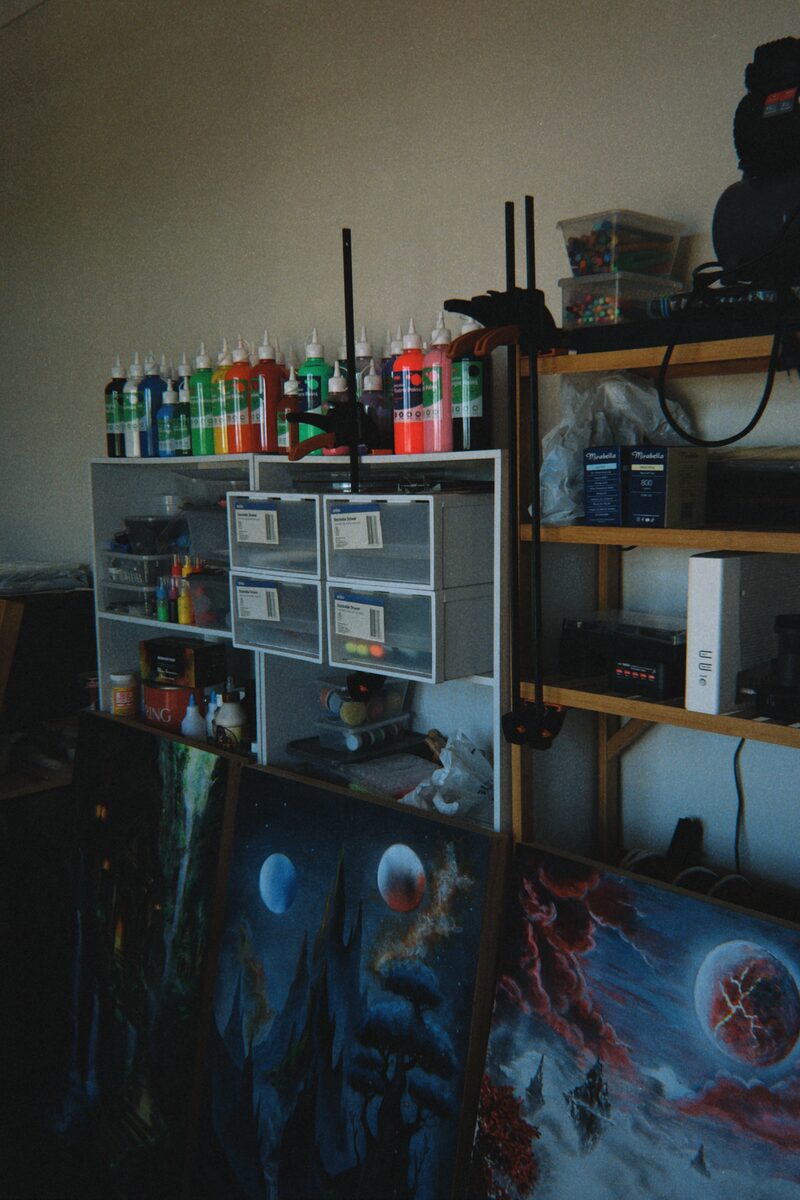
Artwork by Hiki Reedy.
If you saw those four pieces with no name attached you might guess four different artists. Hiki does not think in a single style, and when I ask how she describes what she makes, she will not pick a label smaller than the whole. “One, it’s an artist,” she says, “because I use many different mediums.” The range is the point. What holds it together sits underneath the surface, and it took the whole conversation to find it.
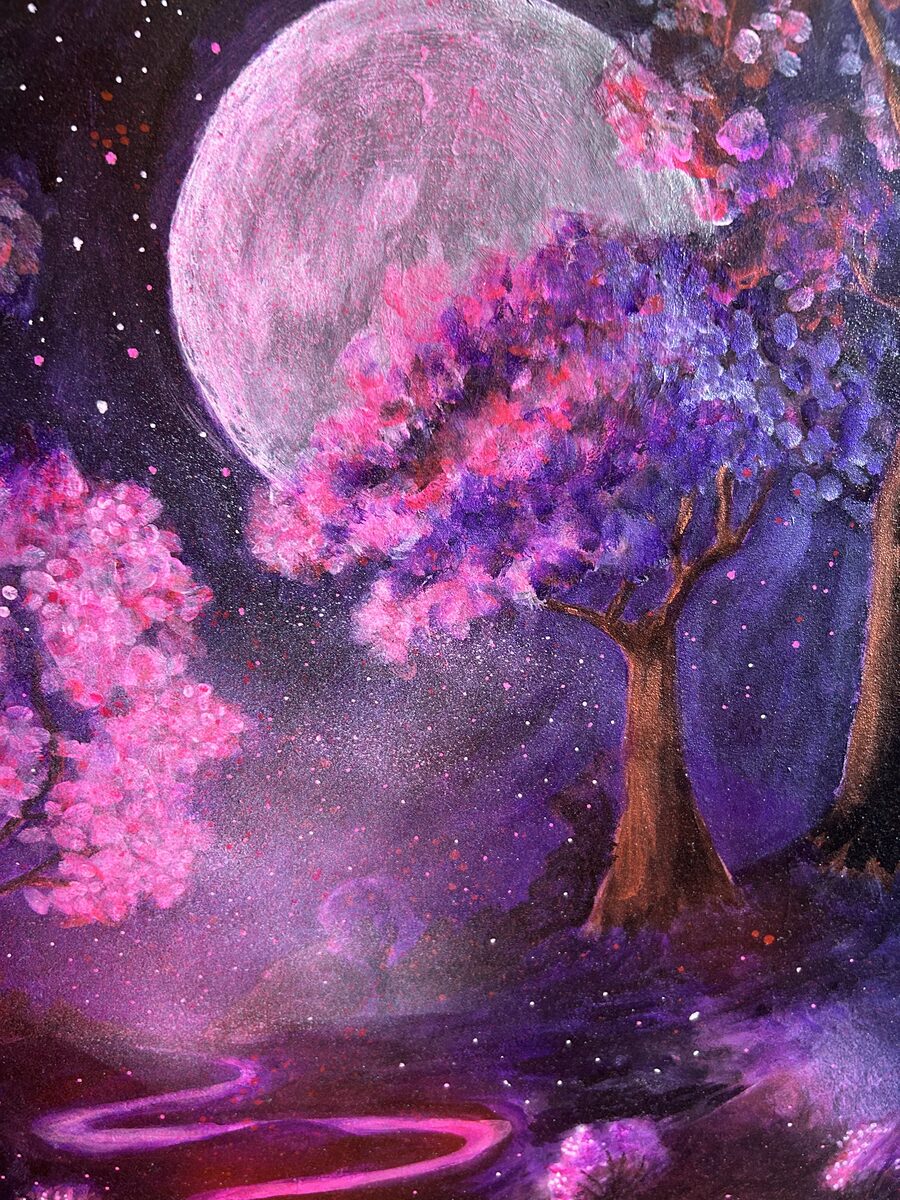
Artwork by Hiki Reedy.
I asked when art stopped being a hobby and turned into something she had to do. She corrected the question. It was never something she had to do. “It’s something that I just am,” she says. “So whenever I want to do it, it’s like just pulling up that part of me into doing it.” She found it young, kept it through school, then went and qualified in architecture, partly because she wanted a job that was artistic and paid. She calls architecture a mathematical art, something that has to work logically if you are going to build it in three dimensions. The years of doing that for other people gave her the confidence to come back to painting for herself.
You can see the architecture in the moko portrait, though not where you would expect. The face is graphite. The frame is a carved field of koru she cut and stained by hand, and she treats it as part of the work rather than a border around it. “Creating the frame is like adding another layer of my skill set,” she says. “A lot of people that know me as an artist might not know that I have architecture in the background.” It breaks away from the frames you buy in a shop. For a cultural piece it does more than that. It lets her set the motifs of her culture around the image and pull the whole thing into three dimensions.
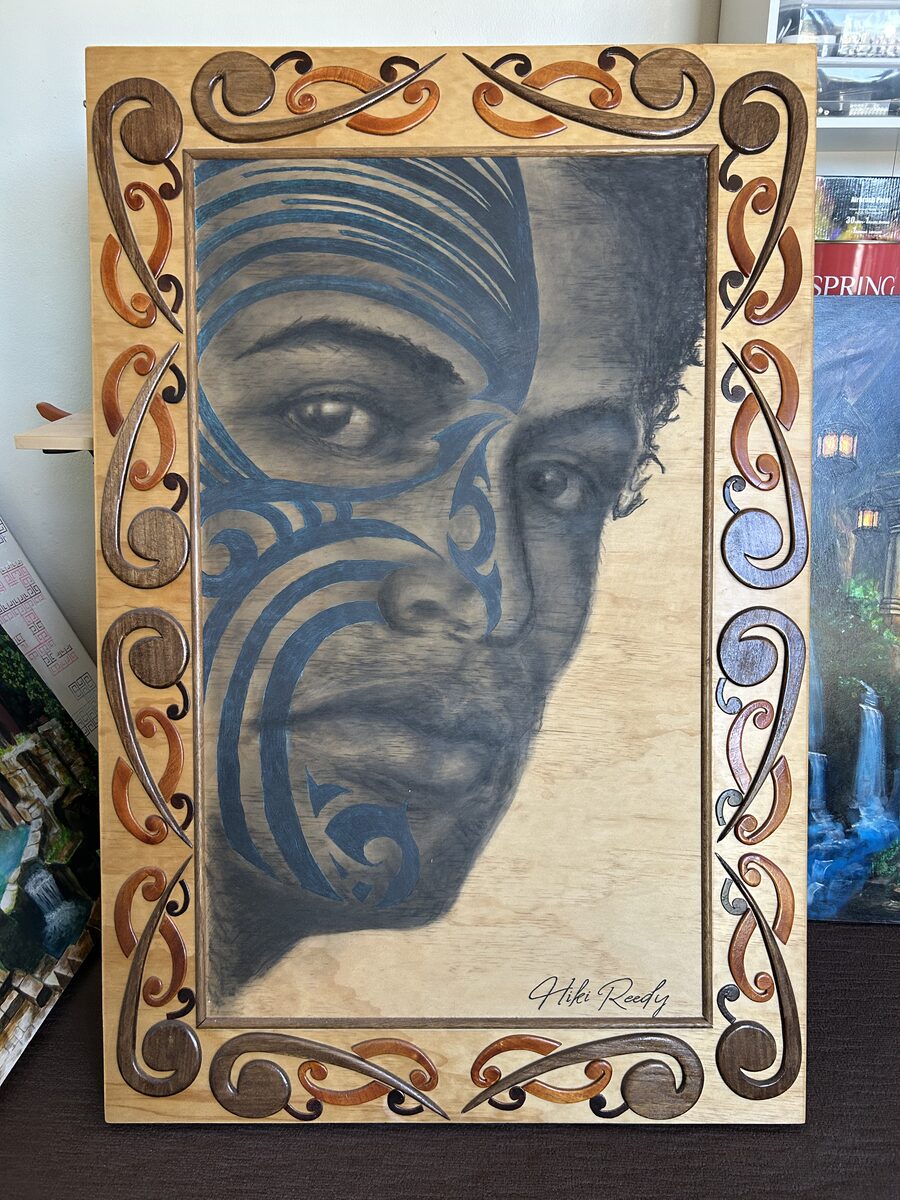
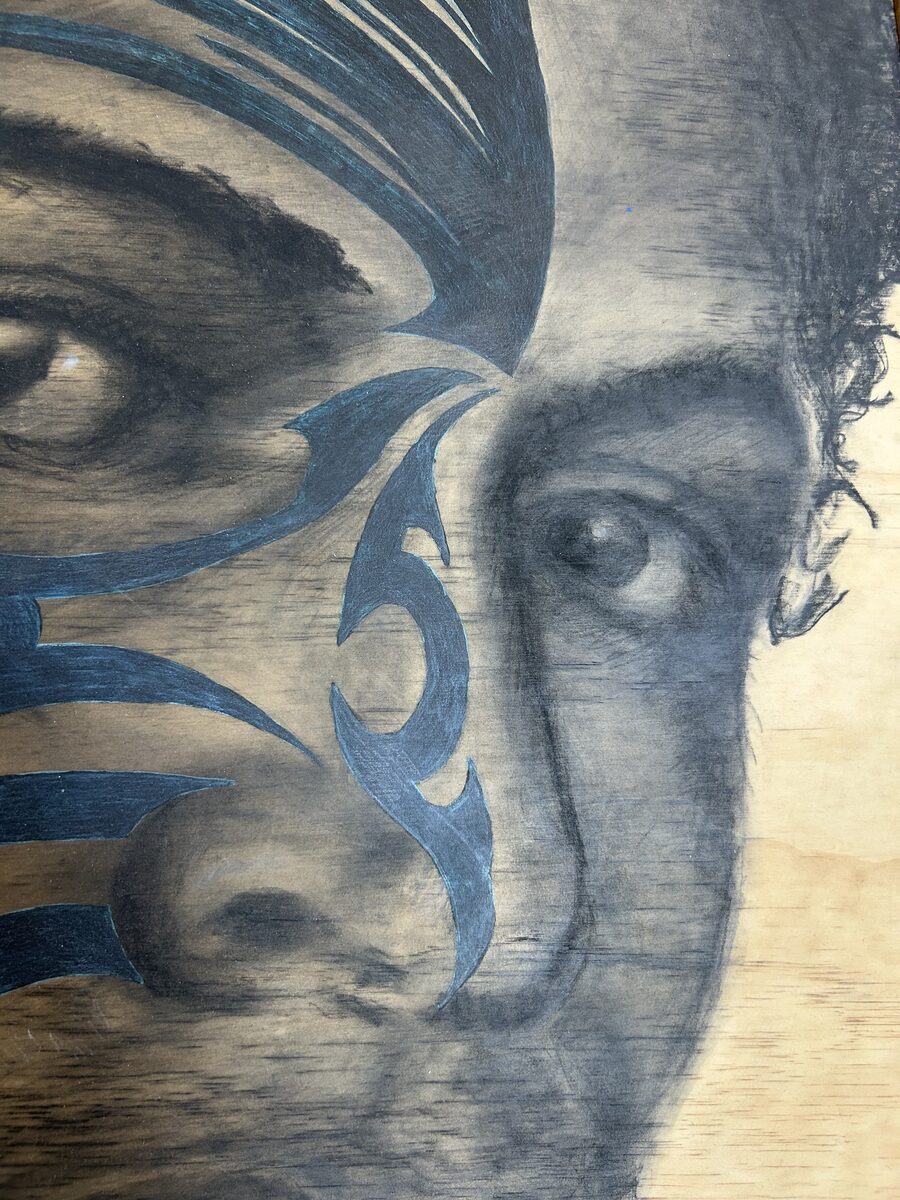
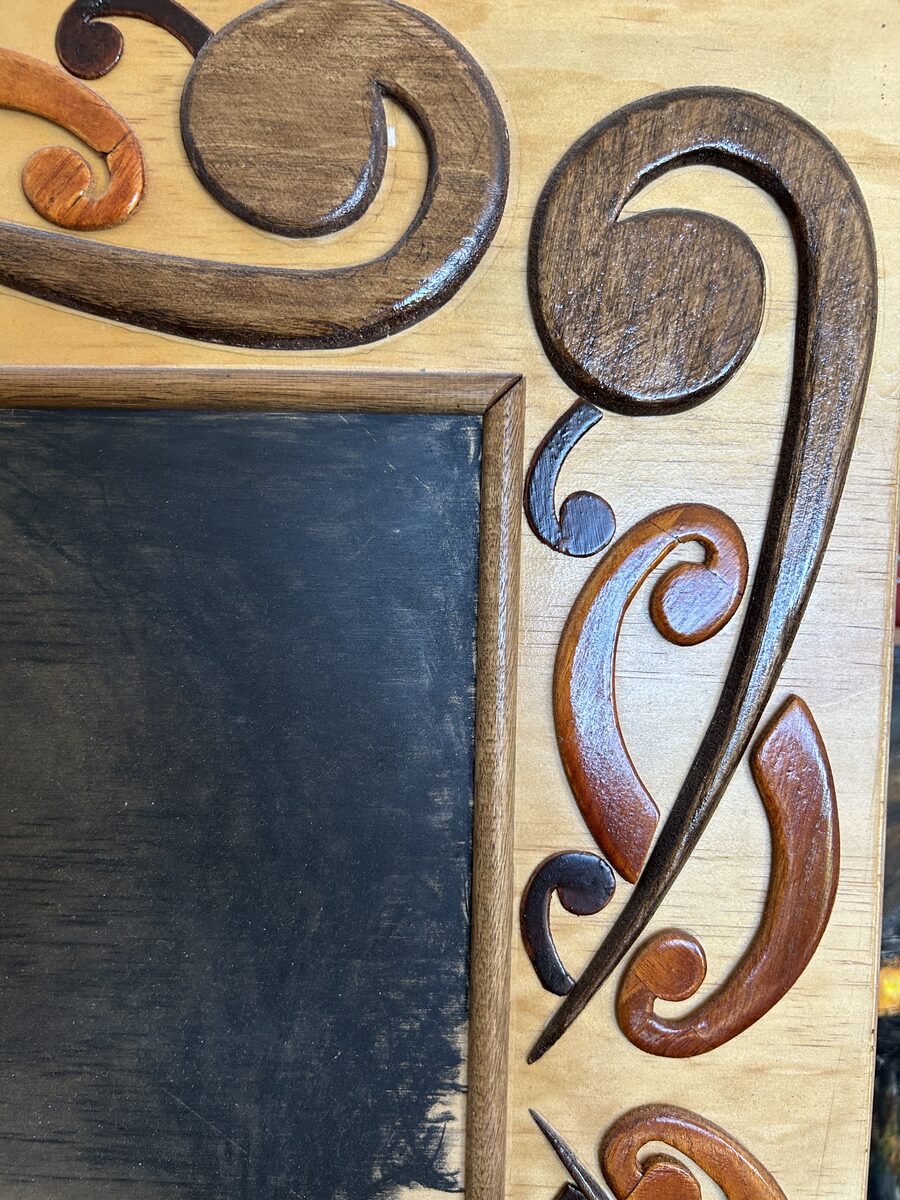
The moko portrait, three views. Artwork by Hiki Reedy.
The moko itself is blue, not the black you might assume. Part of that was simply to break away from the graphite. But the blue is also true to the thing itself. Tā moko pigment reads blue under the skin and fades toward green over time, and she painted what the ink actually does rather than what a design chart would tell you. A small decision, but the kind that separates someone reproducing an aesthetic from someone who knows the material.
The face belongs to no one. This is where her real subject starts to show. She built it the way she builds most of her portraits, pulling features from real people, an eye here, a mouth there, until the result is someone who never existed. “It’s of no one in specific,” she says, “but the piece is having taken from real.” A friend asked if it was a real person. She said yes, because the parts were real, even though the changes along the way left it looking like no one at all. That gap, between the real thing you start from and the thing you end with, is the whole job as she describes it. It is also, though she does not put it in these terms, a working theory of where authorship comes from.
Ask her what a maker owes and where the danger is, and she goes straight there. You put all your effort and time into making something, she says, only to have it taken by someone else and passed off as theirs. She calls a finished piece the maker’s baby. For a magazine that exists to ask who made a thing first and who got the credit, this was the interview answering its own question unprompted. Then she took the same idea somewhere harder.
Culture, she says, comes with a second kind of risk. Not theft this time but authority: the question of who gets to say what counts. She is honest that she is not as fluent in te reo or as deep in the history as some of her cousins. She does not think that disqualifies her. “This is what I am, I am Māori,” she says, “so that’s what I can give to my culture. What I can give of me.” She has met the people who tell you it isn’t right, that it doesn’t go like that. Her position on them is flat. “At the end of the day, it’s your creation.” She has been on the other side of it too, the side where you listen and freeze. “If you keep listening to that, you’ll never create anything, because you fear what others will think, and nothing will be produced. And I’ve been down that track.” She names the thing underneath it as ego, a sense inside a culture’s own people that they know better.
Here is where she makes an argument you can actually disagree with. She wants to take Māori art forward, and forward means colour. Not the same red and black, she says, but colour introduced, a contemporary element added. She points to Aboriginal art as the parallel: the old work in earthy, plain tones, the young artists today painting in full colour. She knows some people, the ones tied to the old school, will not like it, and she thinks you move carefully so as not to hurt anyone. But she does not treat respect for a tradition and the evolution of it as the same choice. “If you want to progress or evolve, you have got to take those steps forward.” You are bringing the old into the new, and someone always resents the new.
This is the strongest thing in her work, and it is why the cultural pieces carry more of her than the fantasy landscapes do. The ghost ships and the glasshouse gardens are beautiful and they are safe. No one is going to tell her a unicorn is inaccurate. The moko portrait is where her argument is actually at stake, where painting the ink blue and framing it in carved koru and building the face from strangers is a position a viewer can reject. That is the work where she has the most to lose, which is usually the work worth looking at longest.
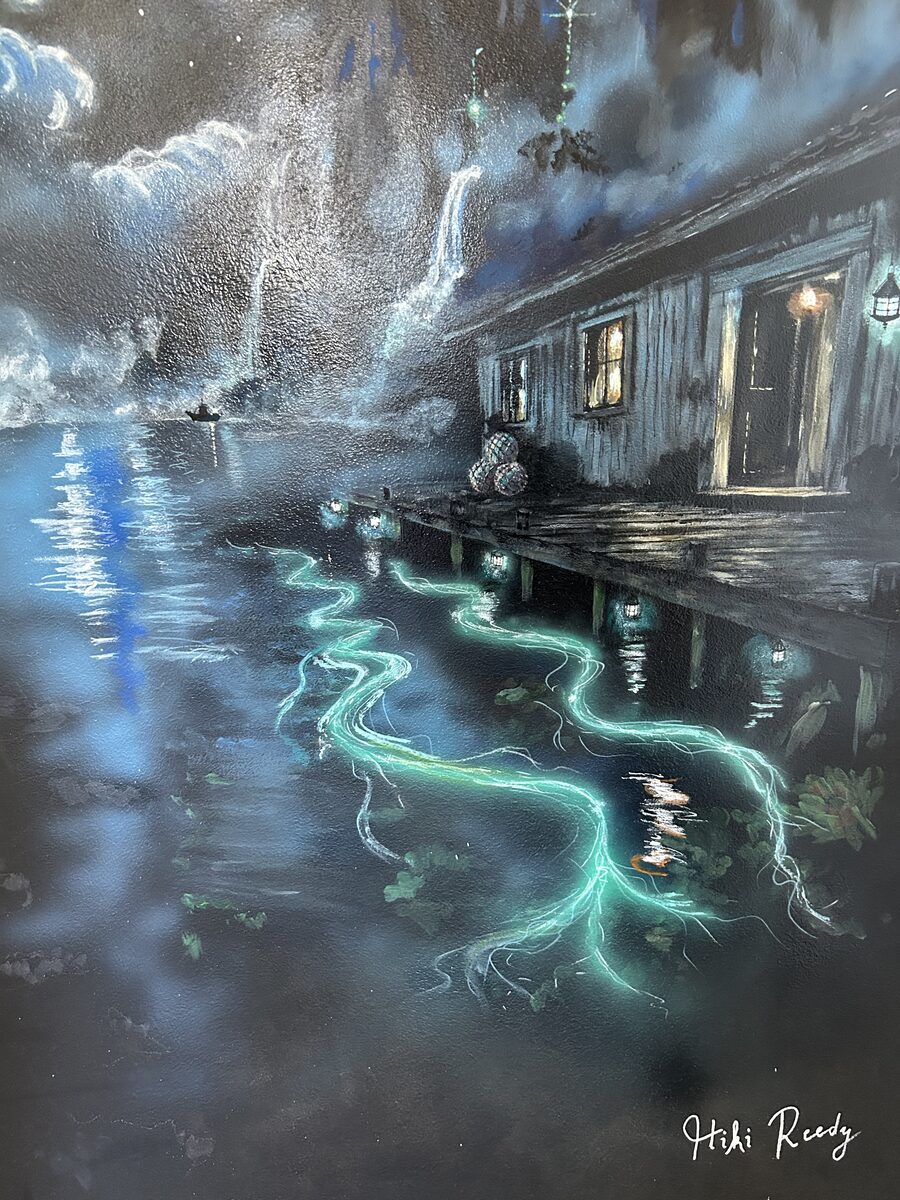
Artwork by Hiki Reedy.
Not that the fantasy pieces are thoughtless. The ghost ship started as a problem she could not solve. She wanted something out on the sea and tried a futuristic ship first. It didn’t look well to her sitting there at night. Then the horror idea arrived, tearing the sails and letting them hang, making the whole thing eerie. What she ended up with reads like a vessel that has been out there alone for centuries, the thing a sailor glimpses once and never forgets. She works with whatever she has, charcoal, acrylic, ink added halfway through a drawing on impulse. “That’s a good thing about art,” she says. “There’s no right or wrong.”
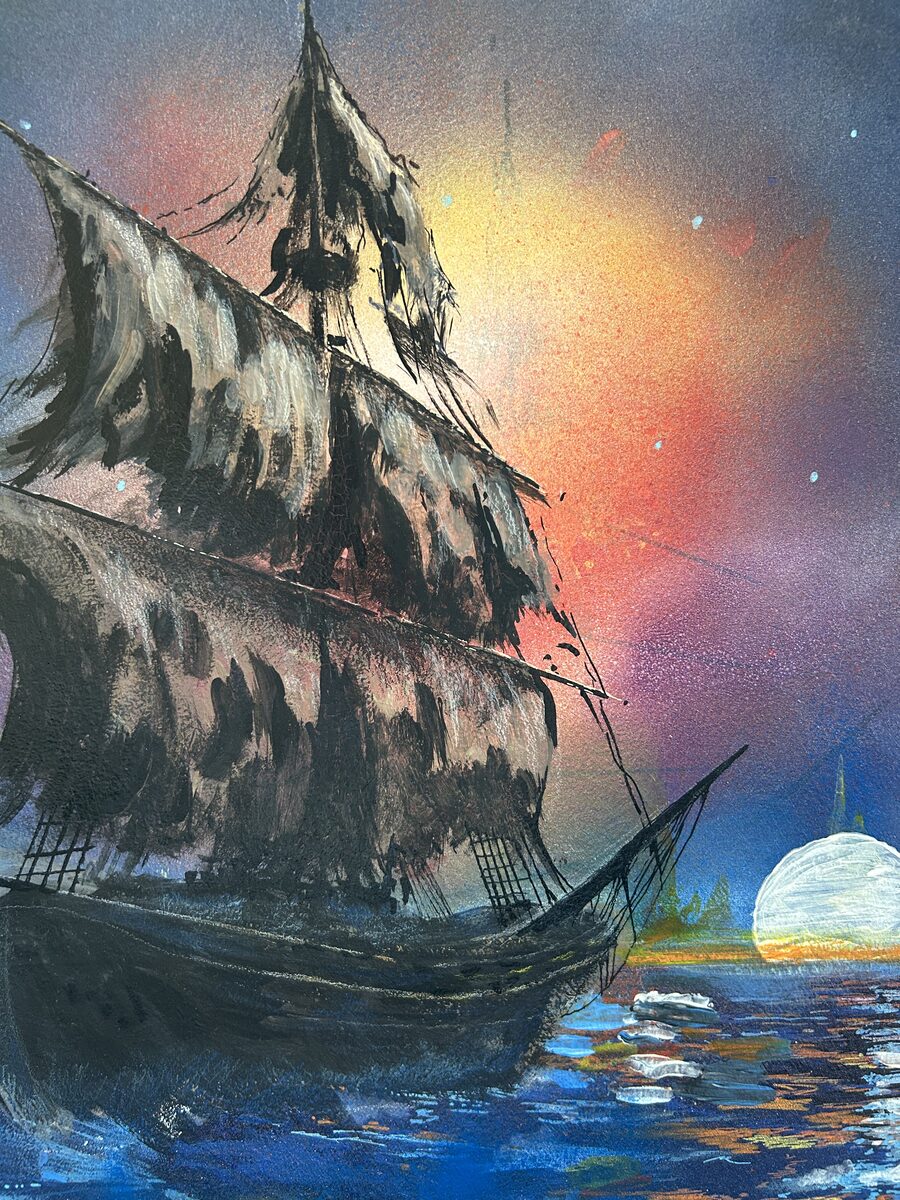
The ghost ship. Artwork by Hiki Reedy.
The landscapes are the same instinct pointed at place instead of ship. They look stumbled upon, grand rooms and gardens gone quiet, luxury that was clearly running once and got left behind. People comment that they have been somewhere like it, which is the effect she is after. She loves the real world, the light and the seasons. She just wants to put a little more magic back into it.
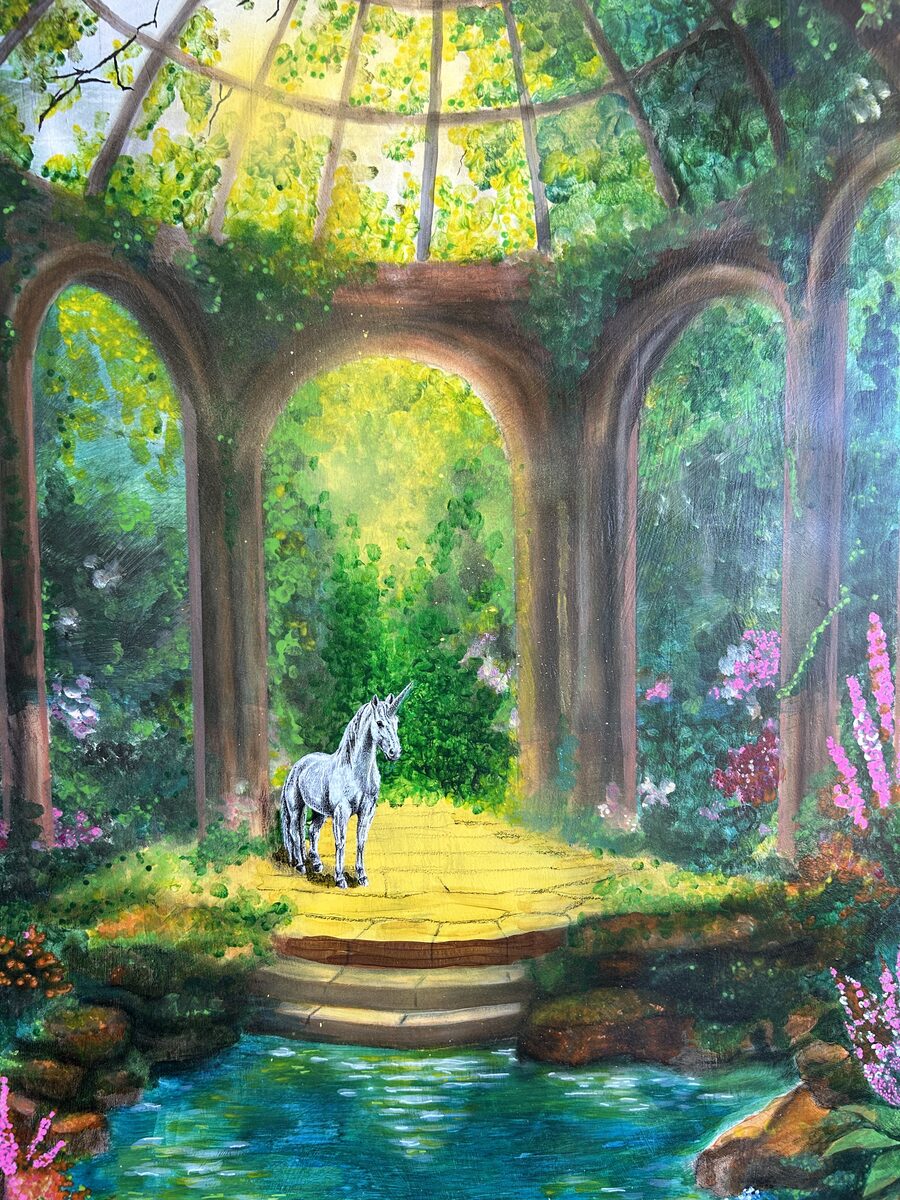
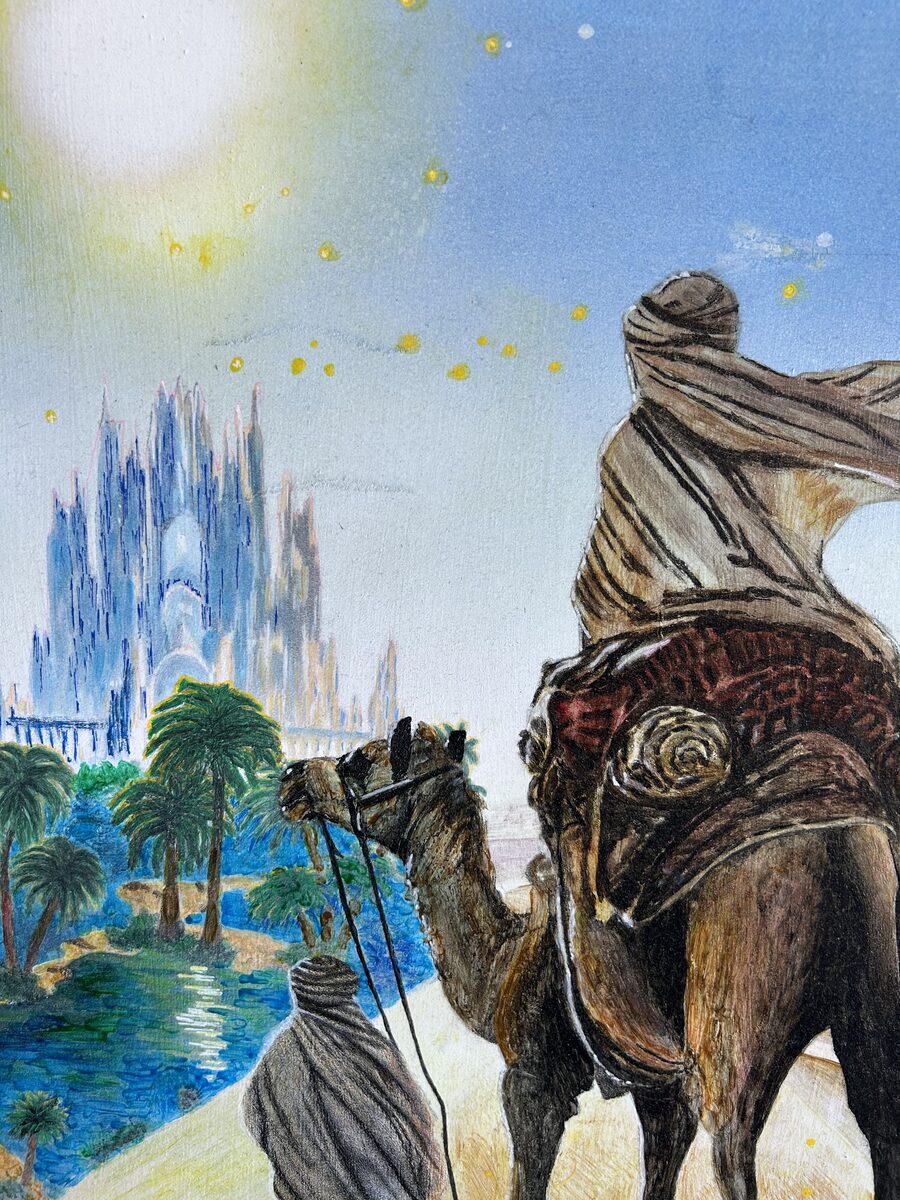
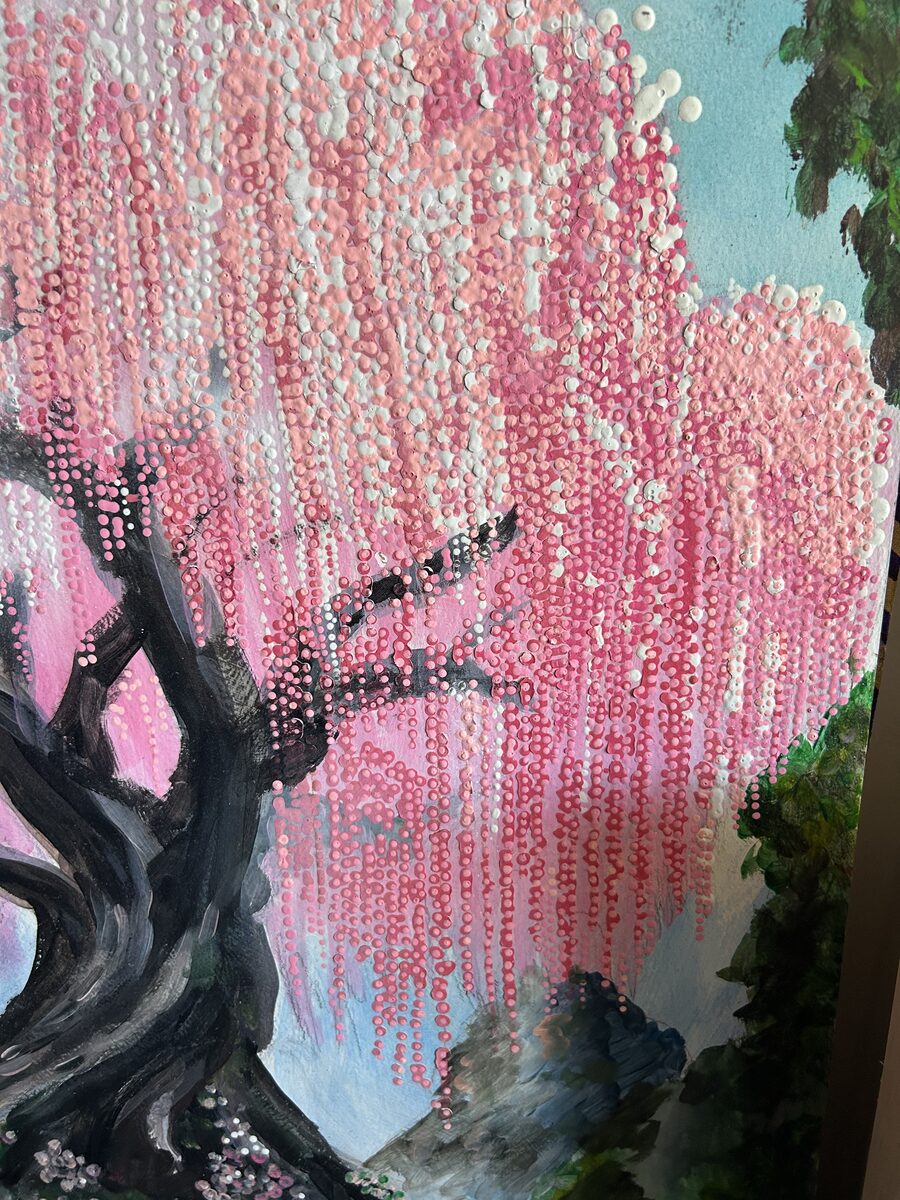
The landscapes. Artwork by Hiki Reedy.
She has never liked parting with her work. With these she wants to. “An art piece finds its owner,” she says. A commission is someone telling you what they want. This is different. Someone comes along later, sees a piece, and recognises it as the thing they had always wanted, or dreamed once and thought they had lost. She would rather the work reach that person than stay hers.
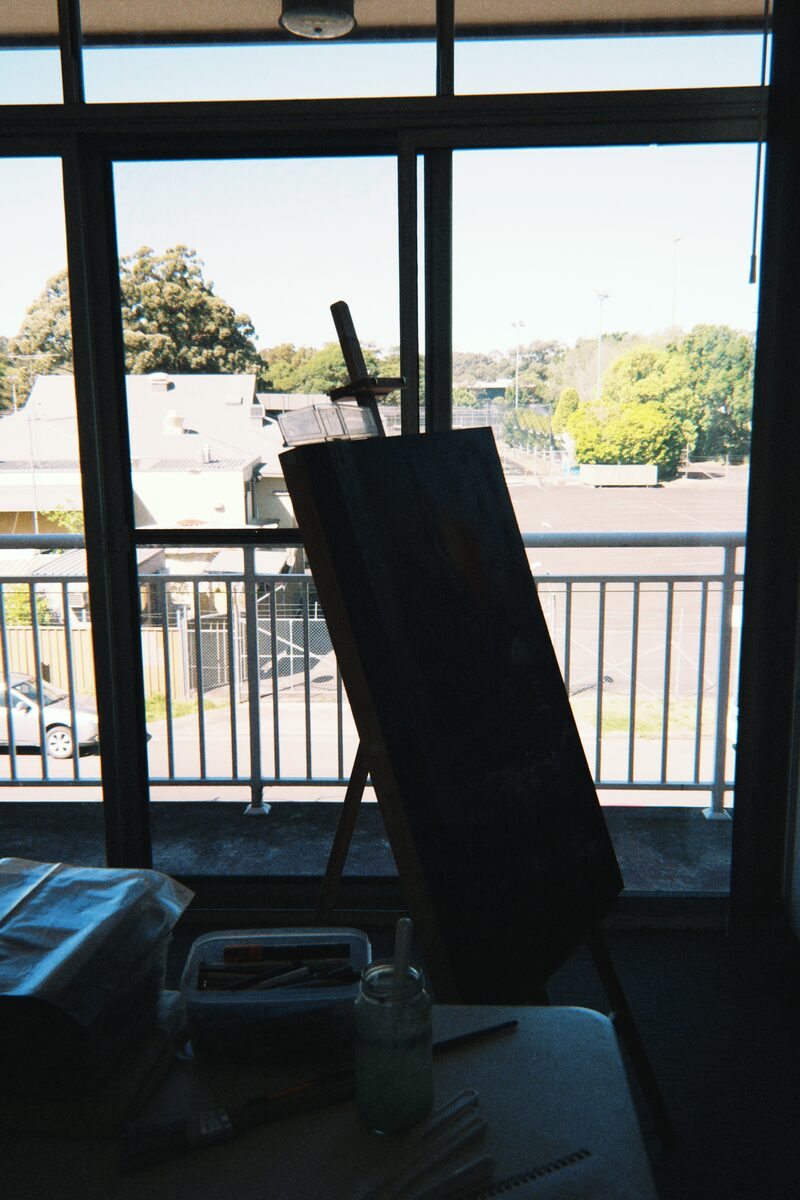
Artwork by Hiki Reedy.
Which is why the exhibition matters, and why she keeps circling it. She is preparing one. She also keeps saying the collection isn’t ready, and she knows people will tell her it never will be. What frightens her is the alternative. She describes the finished pieces as children. You dress them, you comb their hair, you get them ready for what comes next, and then you don’t take them anywhere. So they go back under the sheets in the attic to gather dust, until one day a stranger stumbles up there and finds them torn and faded and reads the date on the back. She does not want to be old and grey and still not have shown them. So the day job pays for the life and the work keeps ticking underneath it, because the work is not a hobby she does. It is the thing she is. “I’m not trying to compete against somebody,” she says. “I’ve just been me.”
Thank you Hiki, for giving me your time and sharing your artwork with me and the world.